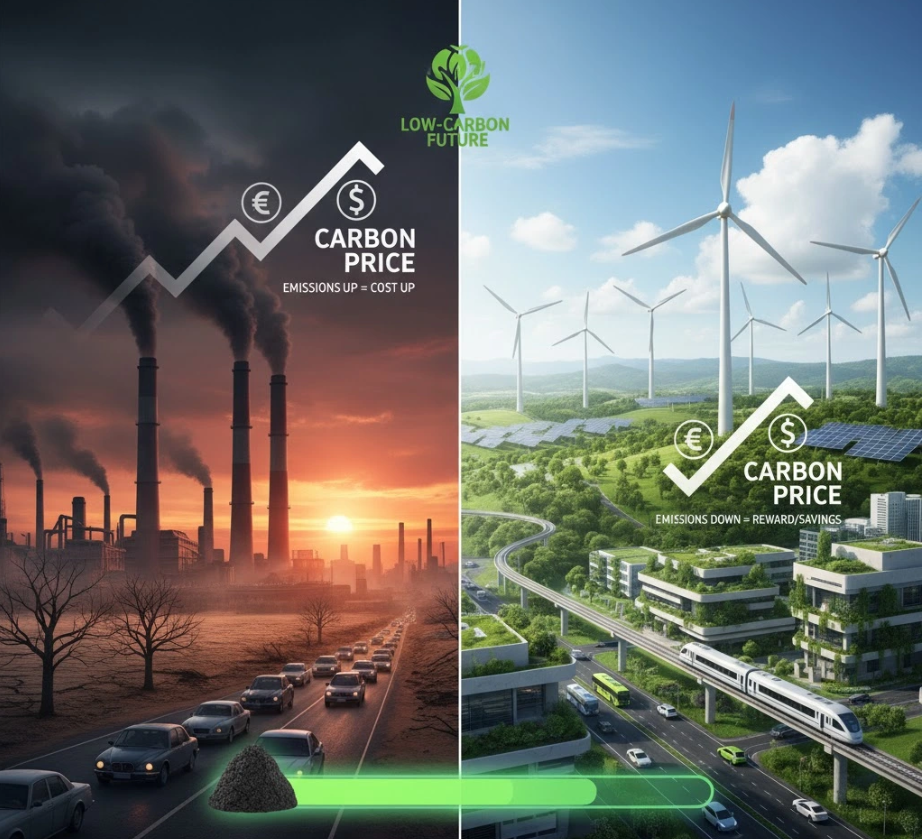
Corporate carbon management aims to help businesses control their carbon emissions. It also offers a strategic approach to environmental sustainability. Therefore, measuring the carbon footprint is the first step. In this way, businesses can clearly identify their emission sources. Furthermore, OBERRON offers specialized solutions in this field. In this case, businesses can manage their carbon management processes more effectively. Therefore, energy consumption and production processes should be analyzed in detail. Low-carbon technology and renewable energy should be encouraged, reducing emissions and costs. Carbon management enhances reputation and ensures compliance, with reporting to international standards critical. Therefore, carbon management plans should be continuously updated.
Table of Contents
- What is Corporate Carbon Management?
- How to Measure Carbon Footprint?
- Advantages of Carbon Management for Businesses
- Stages of Corporate Carbon Management
- What are the Sources of Carbon Emissions?
- Carbon Management and Environmental Sustainability
- Conclusion
- Frequently Asked Questions
What is Corporate Carbon Management?

Corporate carbon management covers the processes of measuring and reducing the carbon footprint of businesses. It is also a strategic approach to ensure environmental sustainability. Therefore, identifying carbon emission sources is the first step. In this way, the impact of businesses on the environment is analyzed more clearly. Furthermore, OBERRON offers comprehensive solutions in this area. In this case, businesses can manage their processes more effectively and efficiently. Therefore, energy consumption and production processes should be carefully analyzed. Furthermore, the adoption of low-carbon technologies is critical for carbon reduction. In this way, both environmental and economic benefits are achieved. Furthermore, carbon management is of great importance for legal compliance.
How to Measure Carbon Footprint?

Carbon footprint refers to the carbon emissions that individuals or businesses release into the environment. Moreover, measuring these emissions is important to reduce environmental impacts. Therefore, a detailed data analysis should be carried out in carbon footprint measurement. Energy consumption, transportation, and waste management are considered. Fuel types and energy sources are identified, distinguishing direct and indirect emissions. Therefore, scope 1, scope 2 and scope 3 emissions are assessed separately. In addition, carbon calculation tools provide great convenience in this process. In this way, emissions can be calculated with standardized methods. Furthermore, internationally recognized protocols guide the measurement. In this case, standards such as the GHG Protocol and ISO 14064 can be applied. Therefore, it is recommended to seek expert support for accurate measurement.
Advantages of Carbon Management for Businesses

Carbon management provides significant environmental, economic and social benefits to businesses. It is also an effective method for energy saving and cost reduction. Therefore, it allows businesses to increase energy efficiency. In this way, production processes can be operated at lower costs. Also, carbon management helps businesses to ensure legal compliance. In this case, criminal risks can be reduced by acting in accordance with international standards. Therefore, businesses’ environmental responsibility increases and gain reputation. In addition, sustainability projects increase customer and investor confidence. In this way, the competitiveness of businesses increases significantly. Moreover, carbon reduction contributes positively to the brand value of businesses. In this case, it becomes easier to adapt to the green economy.
Stages of Corporate Carbon Management

Corporate carbon management is the strategic process that businesses follow to manage their carbon emissions. Moreover, this process consists of several key stages. Therefore, the first step is to measure carbon emissions. In this way, it is determined which activities of the business create emissions. Furthermore, scope 1, 2 and 3 emissions should be analyzed separately. In this case, energy consumption, transportation and waste sources are detailed. Therefore, data collection methods that comply with international standards should be preferred. Carbon reduction targets are set, enabling transitions to low-carbon technologies. Energy efficiency and renewable energy are encouraged. Sustainability projects are commissioned, and emission reduction efforts planned. The third stage involves monitoring and reporting results. Thus, carbon reduction progress can be tracked.
What are the Sources of Carbon Emissions?

Carbon emission sources are activities and processes that generate greenhouse gases that are released into the environment. In addition, energy production is one of the largest sources of carbon emissions. Therefore, the use of fossil fuels should be carefully managed. In this way, it is possible to reduce emissions. Furthermore, industrial activities cause a large amount of carbon emissions. In this case, the energy efficiency of production processes should be improved. Therefore, clean energy technologies should be preferred. Moreover, the transportation sector is an important source of carbon emissions. In this case, vehicles consuming fossil fuels have a major impact. Therefore, electric and hybrid vehicles should be popularized. Furthermore, waste management is another area where emissions are generated.
Carbon Management and Environmental Sustainability

Carbon management is one of the most important strategic practices supporting environmental sustainability. In addition, reducing carbon emissions contributes directly to the environment. Therefore, businesses need to control their carbon footprint. In this way, it is possible to protect natural resources and combat climate change. Furthermore, carbon management involves measuring and reporting environmental impacts. In this case, it becomes easier to achieve sustainability goals. Therefore, energy efficiency and the use of renewable energy should be promoted. Furthermore, carbon management also supports economic sustainability. In this way, businesses provide both environmental and financial benefits. Furthermore, carbon management should be seen as part of social responsibility. In this case, it is possible to increase the environmental awareness of society.
Conclusion
Corporate carbon management is a critical strategy for businesses to reduce their environmental impact and create a sustainable future. Furthermore, managing carbon emissions increases competitiveness while ensuring regulatory compliance. Therefore, businesses should improve energy efficiency and use renewable energy solutions. In this way, they both fulfill their environmental responsibilities and reduce their costs. Moreover, carbon management increases customer and investor trust and contributes positively to the value of the brand. Therefore, businesses should prioritize carbon management in their long-term strategies. Furthermore, continuous improvement and innovation form the basis for sustainable growth. Corporate carbon management enables businesses to work in harmony with the environment and helps them prepare for the future.
Frequently Asked Questions
What is corporate carbon management? Corporate carbon management is the process by which businesses measure, reduce and manage their carbon emissions.
Why is water footprint management important? It is important for sustainable use of water resources and reducing costs.
How is carbon footprint measured? Carbon footprint is calculated with data such as energy consumption, transportation and waste management.
Which sectors have a higher water footprint? Water consumption is quite high in agriculture, textile, energy production and food sectors.
How is water footprint reporting done? Businesses can report their water footprint using the ISO 14046 standard.
Is carbon management mandatory? Carbon management is mandatory for compliance with legal regulations in many sectors.
Which businesses should manage carbon? All businesses with environmental impact should implement carbon management.
How is carbon management reporting done? Reporting is done with international standards such as the GHG Protocol and ISO 14064.
What technologies can be used to reduce water consumption? Use water recycling systems and develop water-saving equipment.
Is carbon management a long-term process? Yes, it is a long-term process that requires continuous improvement and regular monitoring.